
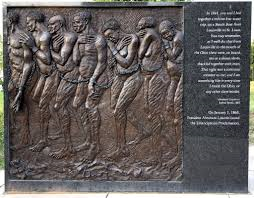
What role did slavery play in the story of U.S. capitalism? Does the fact that slavery wasn’t rooted in wage labor mean that it wasn’t a form of capitalist practice? Caitlin Rosenthal offers a definition of capitalism and shares her understanding of how commodification, and the power to impose it, operated under slavery. Caitlin Rosenthal, … Continued

Against the Grain

Game-Changing Fiction

In his book Promised Land: Thirteen Books That Changed America, Jay Parini describes and analyzes three iconic works of fiction. Uncle Tom’s Cabin, Parini writes, almost single-handedly created a mass audience for the antislavery movement. Adventures of Huckleberry Finn interrogated race in fundamental ways and introduced a distinctive vision of freedom. And On the Road … Continued


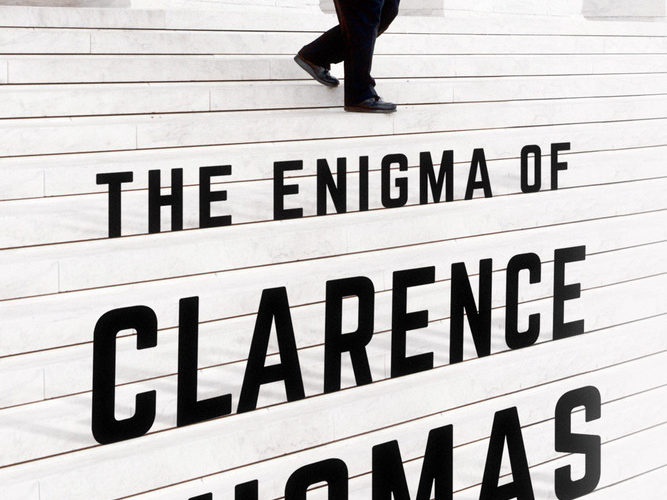
Clarence Thomas is Donald Trump’s favorite Supreme Court justice, which might confirm the liberal view that Thomas is simply a toady of the right.  But scholar Corey Robin argues that Thomas is a complex thinker and skilled rhetorician, whose ideas originate in black nationalism.  Robin reflects on how Thomas’ pessimism about the intractability of racism … Continued


Highlights of some of the best commentary presented on Against the Grain in 2019, featuring Max Haiven on revenge in a capitalist context; Helena Sheehan on European and Soviet communism; Manu Samnotra on civilization and political resistance according to Gandhi; Michael Burawoy on Pierre Bourdieu and Karl Marx; and Margaret Hunter on what she calls … Continued


Against the Grain

Remembering Immanuel Wallerstein

Immanuel Wallerstein (1930-2019) was a radical sociologist and economic historian who pioneered world-systems analysis. Although he analyzed what he called the capitalist world-economy over its centuries-long development, he remained a staunch, and globally influential, critic of capitalism. Immanuel Wallerstein, World-Systems Analysis: An Introduction Duke University Press, 2004 Immanuel Wallerstein, The Essential Wallerstein The New Press, … Continued