Fund Drive Special: Five Celebrated Voices from the Archives
Rare recordings of George Carlin, John Lennon, Bob Dylan, Carlos Castaneda, and Kate Clinton.

12:00 PM Pacific Time: Mondays - Wednesdays
Acclaimed program of ideas, in-depth analysis, and commentary on a variety of matters—political, economic, social, and cultural—important to progressive and radical thinking and activism. Against the Grain is produced and hosted by Sasha Lilley.
Rare recordings of George Carlin, John Lennon, Bob Dylan, Carlos Castaneda, and Kate Clinton.
In the wake of the devastation of Hurricanes Harvey and Irma, while wildfires continue to rage across the West, it would seem like the perils of global warming are self-evident. And in fact, there’s one part of the U.S. government that, unlike President Trump, sees climate change as an undeniable danger: the military and Homeland … Continued
According to David Theo Goldberg, society is becoming militarized in myriad, and sometimes subtle, ways. Race, as it’s perceived and deployed, is a key part of this process. Goldberg also asserts that race is the secularization of the religious; that today’s anti-Muslim fervor is not primarily religion-focused; and that many groups working to demilitarize society … Continued
What can Hinduism’s meditative traditions offer to movements for social change? In especially Tantric principles Farah Godrej finds resources for challenging gender, class/caste, and other hierarchies. Of particular significance, in Godrej’s view, is Tantra’s rejection of the matter/spirit dualism that pervades orthodox Hindu philosophical systems. Farah Godrej, “Orthodoxy and Dissent in Hinduism’s Meditative Traditions: A … Continued
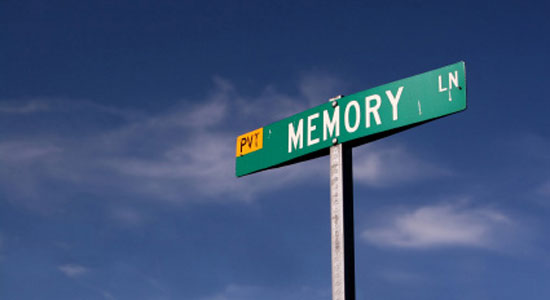
How we remember the past appears innate: a look back to the lost innocence of childhood and adolescence, to the sounds and sensations of our early years. But historian Gary Cross says that how we remember the past, and what past we even choose to remember, has everything to do with contemporary capitalism, based on … Continued
Anarchist rabble rouser, maverick woman doctor and abortion provider, political prisoner, and out lesbian at the turn of the 20th century — Marie Equi was a remarkable figure who has only recently been recovered from the amnesia of history. Historian Michael Helquist discusses the turbulent life and times of a pioneering radical. (Encore presentation.) Resources: … Continued
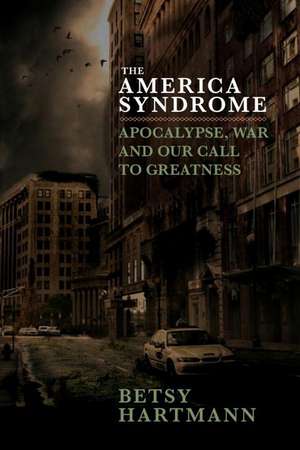
It’s easier to imagine the end of the world than the end of capitalism, as the popular observation goes. But, according to Betsy Hartmann, that’s an especially American outlook. She discusses what she calls the America Syndrome: the national propensity toward apocalyptic thinking, rooted in religiosity and imperial expansion. Resources: Betsy Hartmann, The America Syndrome: … Continued
Sheldon Wolin, who famously invoked the specter of inverted totalitarianism, also put forward a concept of “fugitive democracy.” While many theorists of democracy found the concept too bleak and despairing, David McIvor argues that Wolin was in fact pushing for the development of enduring, and radically democratic, ways of thinking and acting. (Encore presentation.) David … Continued
Conservative think tanks, like the American Enterprise Institute, the Heritage Foundation, and the Cato Institute, have had enormous success in shaping political ideas and policy over the last forty years. But historian Jason Stahl argues that some of their greatest achievements have been in remaking the terrain on which historically liberal think tanks have operated … Continued
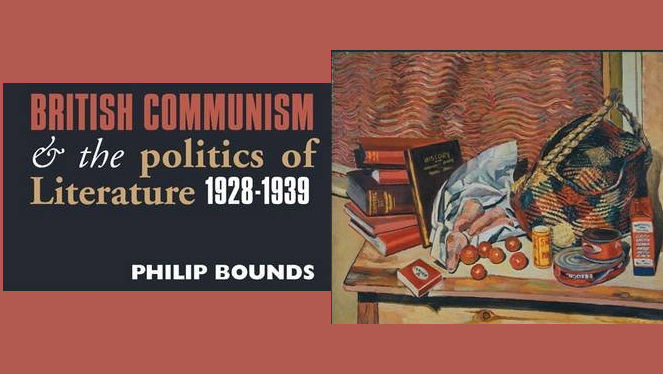
In relation to the radical political groupings of his time, the British Marxist T.A. Jackson occupied the position of an outsider. So asserts Philip Bounds, who finds Jackson’s inability to conform not only refreshing but of immense value to the revolutionary project. Bounds also discusses Jackson’s understanding of the political views of Dickens and Shakespeare. … Continued