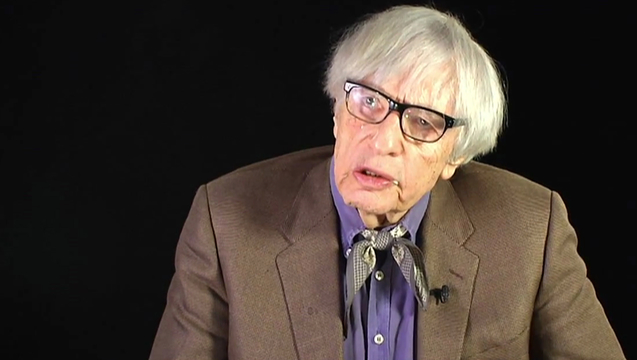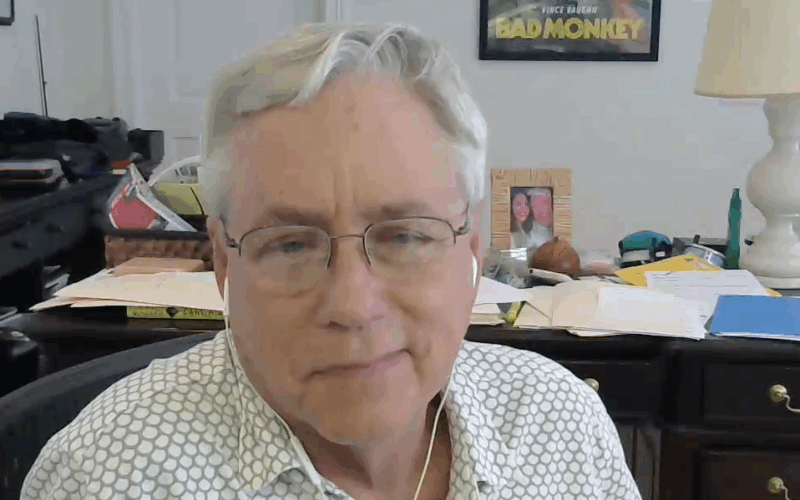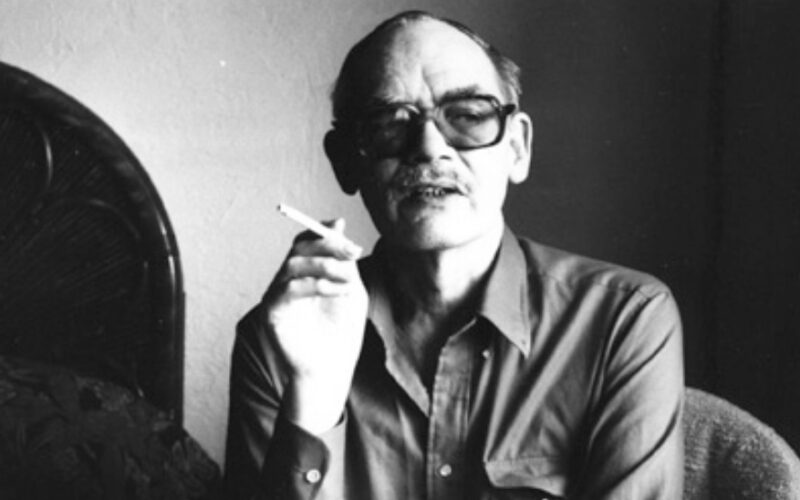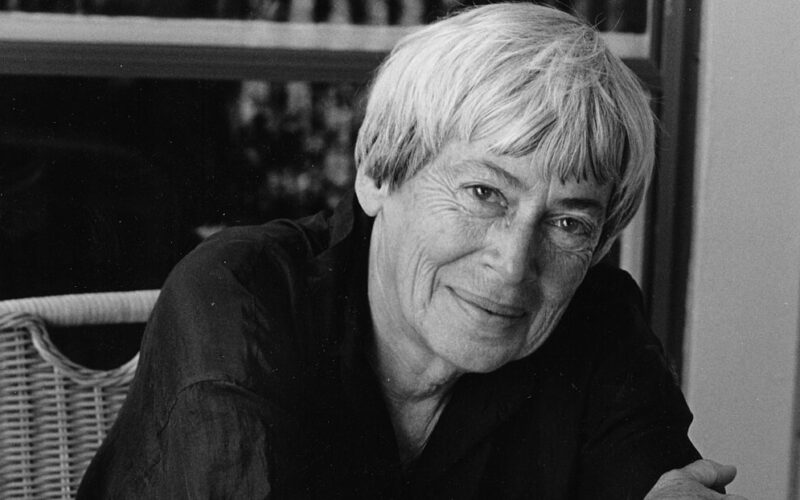

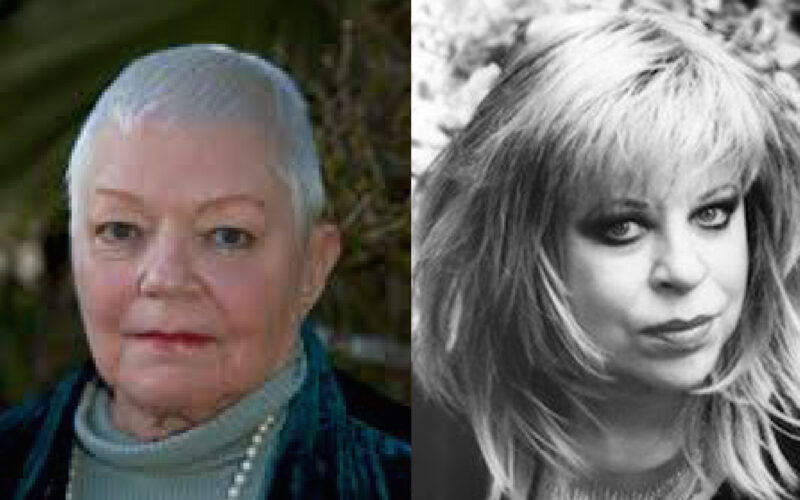
Tanith Lee (1947-2015) and Chelsea Quinn Yarbro (1942-2025). This podcast honors two master practitioners of horror, fantasy and science fiction, Chelsea Quinn Yarbro and Tanith Lee, with two interviews back to back. In the first, Chelsea Quinn Yarbro joins Richard A. Lupoff to speak with Tanith Lee, recorded in San Jose in 1983. In the second, Richard Wolinsky speaks with Chelsea Quinn Yarbro about her historical horror fiction, recorded in late 1978 or early 1979.
Hosted by Richard Wolinsky.
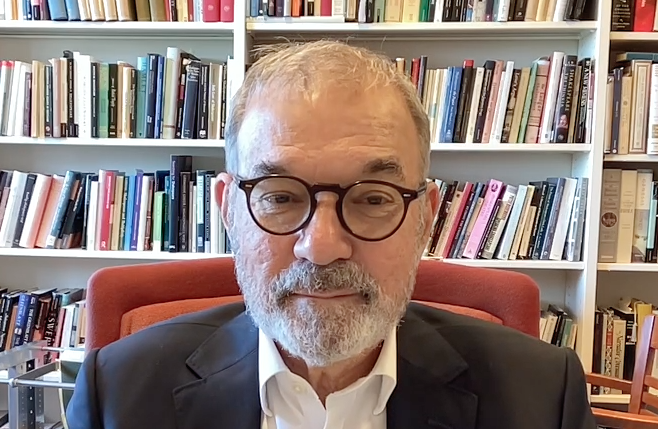
Stephen Greenblatt, Shakespearean scholar and Professor of the Humanities at Harvard University, discusses his book “Dark Renaissance: The Dangerous Times and Fatal Genius of Shakespeare’s Greatest Rival,” along with thoughts on politics in America today, the destruction of American science, political violence and other themes. Hosted by Richard Wolinsky.

Robert Jay Lifton, who died on September 4, 2025 at the age of 99., was a psychiatrist and author who studied the psychological causes and effects of wars and political violence. In this interview recorded in 1999, he talks about cults, in partricular Aum Shinrikyo, the group that loosed sarin gas into the Tokyo subway system, snd about the nature of war and trauma. He was interviewed by Richard A. Lupoff and Richard Wolinsky. This interview was digitized, remastered and edited in September 2025 by Richard Wolinsky and is heard in its entirety for the first time. Hosted by Richard Wolinsky.

Carl Hiaasen is a novelist best known for writing humorous and satiric crime thrillers set in Florida. His latest novel, “Fever Beach,” satirizes the Proud Boys and Oath Keepers, corrupt nepo Florida Congress-critters, and rich right-wing geriatric billionaires. Until 2021, he was a regular columnist for The Miami Herald, appearing every Sunday to discuss political and social issues. He is interviewed by host Richard Wolinsky.

Frederik Pohl (1918-2013) was a Hugo winning novelist and short story writer, along with being a pulp magazine editor and agent who was one of the leaders of the left-wing Futurian group of fans and writers in the 1930s. He discusses his career in this interview recorded at the Octocon Science Fiction Convention, October 15-16, 1978. Interviewers: Richard Wolinsky, Richard A. Lupoff and Lawrence Davidson, for KPFA’s Probabilities radio program. Digitized, remastered and re-edited February, 2021 by Richard Wolinsky.

Ursula K. Le Guin, who broke the artificial wall between science fiction and literature, died on January 22nd, 2018 at the age of 88. An essayist and poet along with being a fiction writer, she transcended all genres with the quality of her prose and the allegorical nature of her work. This podcast is taken from an interview recorded in 2000 hosted by Richard Wolinsky and Richard A. Lupoff, along with excerpts from a 1983 interview with Richard A. Lupoff.

Ray Bradbury, the legendary author who passed away in 2012, sat down for an interview with Richard Wolinsky and Richard A. Lupoff in 1992 at his home in Los Angeles Though called a science fiction or fantasy writer, Ray Bradbury spanned all genres, from poetry to mystery to mainstream fiction. Among his works include The Martian Chronicles, Something Wicked This Way Comes, Farenheit 451 and The Illustrated Man. Photo: Wikipedia Commons

Isaac Asimov, who died in 1992 at the age of 72, was one of science fiction’s greatest writers. The author of the Foundation Trilogy, “I Robot,” “The Gods Themselves,” and several other novels, along with over a hundred other books, he is widely recognized as a writer for the ages. This interview with host Richard Wolinsky was conducted on August 10, 1983 for KPFA’s Probabilities radio series. Photo/Illustration: Creative Commons. Originally posted August 22, 2021.

Robert Macfarlane, whose latest book is “Is a River Alive,” in conversation with host Richard Wolinsky. The best-selling nature writer, and author of “Underland” and “The Old Ways” discusses the relationship of the human race to nature in the context of the rights of natural phenomena, specifically rivers. What rights does the earth have in terms of man’s hegemony? Where do we fit in nature?