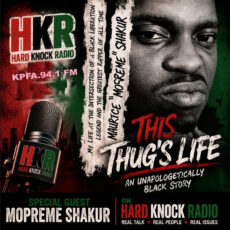

On a recent episode of Hard Knock Radio, host Davey D sat down with rapper, author, and longtime community figure Mopreme Shakur for an in depth conversation about his new memoir, This Thug’s Life. The wide ranging interview explored family, politics, Hip Hop culture, and the untold stories behind one of the most discussed families in modern Black history.
Throughout the conversation, Mopreme explained that writing the book was deeply personal because so many people have attempted to tell the Shakur family story from the outside. He said he wanted readers to hear directly from him about his experiences with his father Matulu Shakur, Afeni Shakur, Tupac, and the revolutionary environment that shaped their lives. He also addressed common misconceptions about Tupac, noting that many of his brother’s controversial decisions were thoughtful and strategic, even if the public did not fully understand the circumstances behind them.
A major section of the interview focused on Matulu Shakur and his role in Black liberation struggles during the 1960s and 70s. Mopreme detailed his father’s involvement with the Black Panthers, the Young Lords, and the Lincoln Detox program in the Bronx. He described how activists transformed Lincoln Hospital, once known as “The Butcher Shop,” into a center for community based healthcare and addiction treatment. The discussion highlighted how Matulu helped pioneer acupuncture treatment programs for heroin addiction at a time when those methods were criminalized and politically targeted. Davey D connected these struggles to broader conversations about healthcare, surveillance, and government repression, including COINTELPRO and the criminalization of Black political organizations.
The interview also gave listeners a rare glimpse into the personal side of the Shakur family. Mopreme spoke warmly about Tupac as a fearless and energetic child who always tried to keep up with older relatives. He described Matulu as a loving and present father who walked his children to school, encouraged them, and balanced parenting with intense political organizing. The conversation emphasized how family within the Shakur household extended beyond blood relations and included a wider community rooted in liberation politics and collective responsibility.
As the discussion shifted toward music, Mopreme reflected on growing up around church choirs, spoken word traditions, and the early rise of Hip Hop in New York City housing projects. He described Hip Hop as an extension of revolutionary poetry and Black creativity, influenced by artists like Gil Scott-Heron and the Last Poets. Mopreme also shared the story behind his appearance on Tony! Toni! Toné!’s classic hit “Feels Good,” revealing that he landed the opportunity after investing in his own demo sessions in Oakland following his time in the Army. He recalled how the success of that record opened doors for him and inspired Tupac to further pursue music professionally.
Later in the interview, Davey D and Mopreme discussed the rise of Digital Underground and the Bay Area Hip Hop scene during the late 1980s and early 1990s. Mopreme reflected on the creative energy surrounding artists like Shock G, Money B, and others connected to the collective. The conversation also explored Tupac’s long term vision for groups like Thug Life, the Outlawz, and the Have Nots, all of which were meant to build community and opportunity for younger artists.
By the end of the interview, This Thug’s Life emerged not simply as a memoir about fame or celebrity, but as a layered reflection on Black political struggle, family bonds, survival, and Hip Hop culture across multiple generations.